
I designed, 3D modeled, and 3D printed a life size, modular soybean plant.
In the field of extension, our most enduring challenge is also our greatest opportunity: to translate complex, dynamic natural systems into clear, accessible knowledge. At the heart of this mission is the need for tools that not only inform but also inspire. It is from this need that inspired the modular, and interactive 3D printed model of the soybean plant.
From Abstract Concept to Tangible Reality
The vision was to move beyond two-dimensional imagery and create a three-dimensional teaching aid that could be deconstructed and reassembled. In order to foster a deeper, intuitive understanding of soybean morphology, development, and the tangible impact of environmental stressors.
The first step of this project was collecting resources and references to begin my design. When creating things like this its not as simple as directly copying what you see. You are limited by the manufacturing process and material constraints. In addition to that when creating a scientific model its important to synthesize all refrences down to the most essential information, while removing excess distracting and often unclear elements. This often means changing the shape, size, and organization of the model. Doing so in a way that does not take a way from the true representation of the specimen is a challenge.
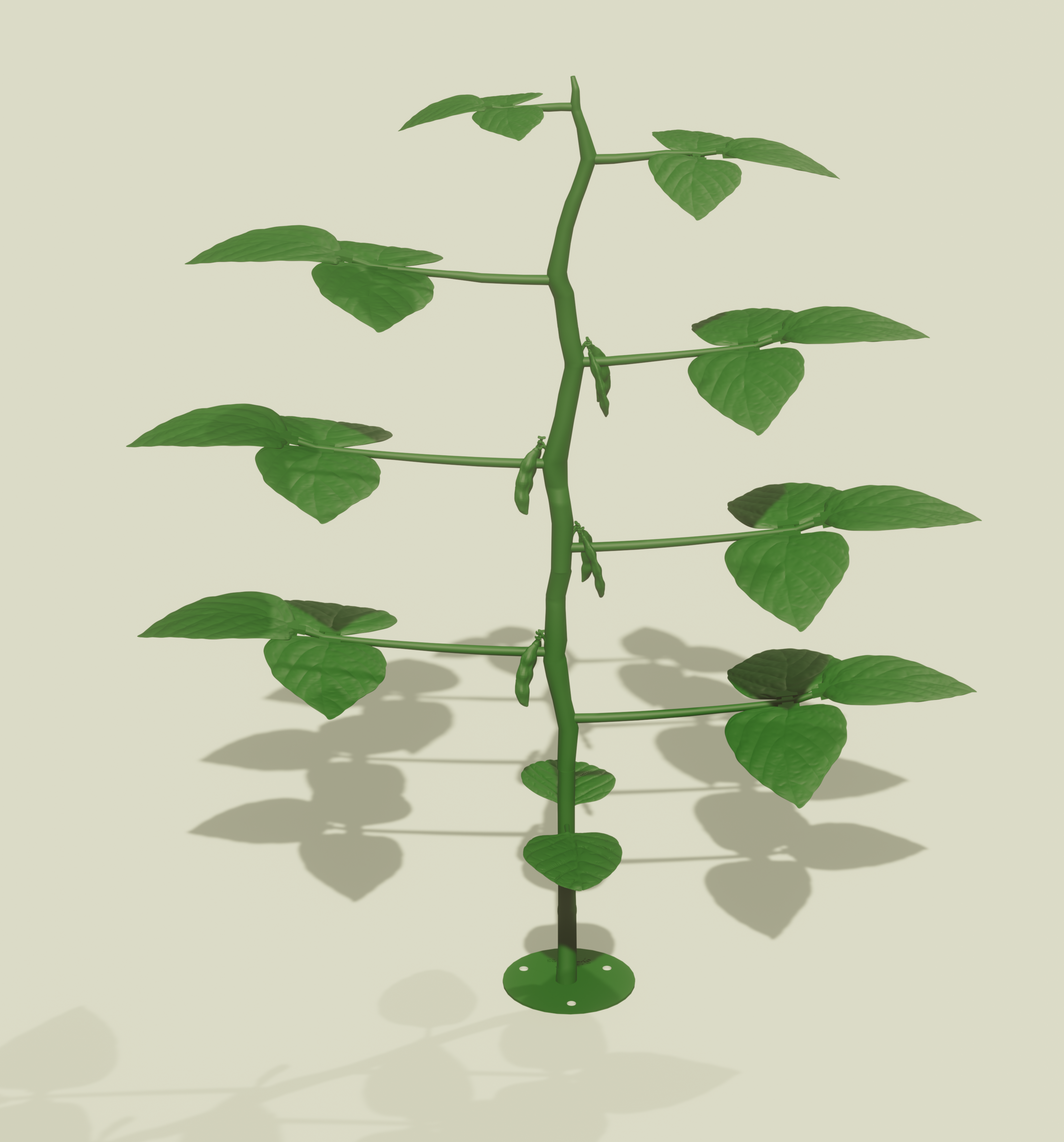
Some detail has been removed from the interactive plant to keep things running smoothly
3D Soybean Model
🖱️ Click & drag to rotate
🔄 Scroll to zoom
🎮 Auto-rotate enabled
Powered by Three.js
Through an iterative process of printing and refinement, a full-scale, physical representation of a soybean plant was created. The model’s core advantage is its modularity. Each leaf is a discrete unit that affixes securely to the stem via an internal clipping system. This design choice transforms the model from a passive display into an active learning experience, enabling educators to provide a tangible proxy for in-field observation, allowing individuals to practice identifying and locating specific structures. The majority of the feedback thus far has been on how it really stands out in an outreach setting and how great the interactivity elements are.
The Next Steps
The enthusiastic reception of this initial model is both validating and invigorating. It has recharged my motivation as we move into the next phase of development: the creation of a comprehensive library of interchangeable components that depict specific biotic stressors. This evolving library will soon enable educators to visually and tactilely demonstrate the distinct signatures of common threats:
-Damage from soy bean Gall Midge -The distinctive window-paning damage caused by bean leaf beetles. -The progressive defoliation patterns of injured plants
This capability will transform the model into a diagnostic toolkit, empowering individuals to recognize, differentiate, and discuss management strategies for these pests with greater confidence and accuracy.
A work in progress
This project is, at its core, a response to the needs of the educational community. The insightful feedback we’ve already gathered at recent events is the critical ingredient for its continued development. We are cultivating this tool not in isolation, but in partnership with you. We invite your collaboration. What specific modules—be it for disease, nutrient deficiency, or other pests—would most profoundly impact your educational programs? Your expertise is essential as we nurture this project to its full potential. This model represents a seed of an idea: that through creativity and technology, we can foster a more profound connection to the science that feeds our world. We look forward to sharing its continued growth with you.
Please don’t hesitate to reach out with feedback or comments via email at JatomSynergies@gmail.com